Based on an interview with Fabien Lombard, Associate Professor at Sorbonne University.
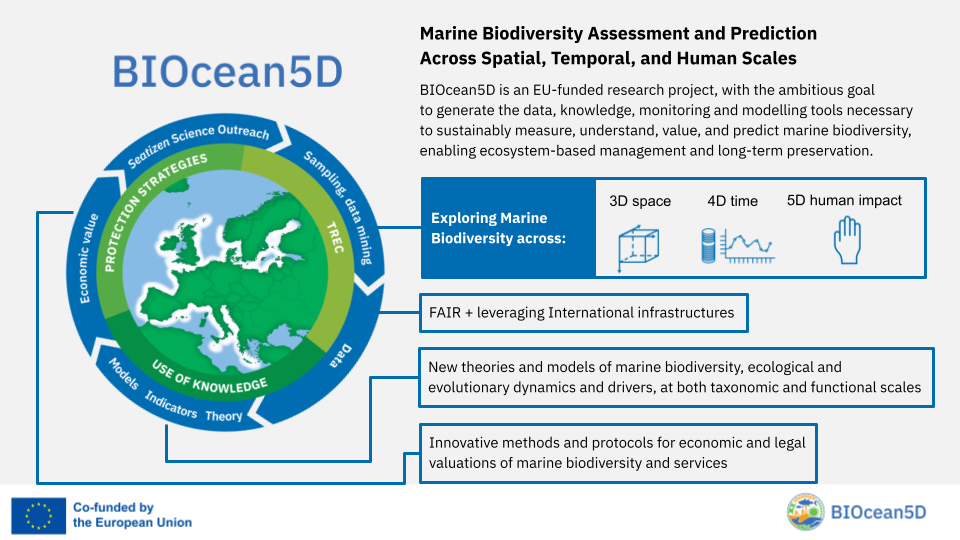
BIOcean5D is a European scientific project funded by the European Union, UKRI (UK Research and Innovation) and SERI (State Secretariat for Education, Research, and Innovation) with a budget of 17 million euros. The initiative is jointly led by EMBL and CNRS, bringing together a network of 31 partners across 11 countries.
BIOcean5D aims to support the development and deployment of tools to equip a network of European marine laboratories with instruments that can produce standardized data on marine biodiversity. This is how the PlanktoScope integrates the project with 50 instruments deployed across laboratories throughout Europe, in which Fabien Lombard plays a central role.
These data also contribute to the global plankton dataset built by the long-term initiative Plankton Planet.
Credit: BIOcean5D
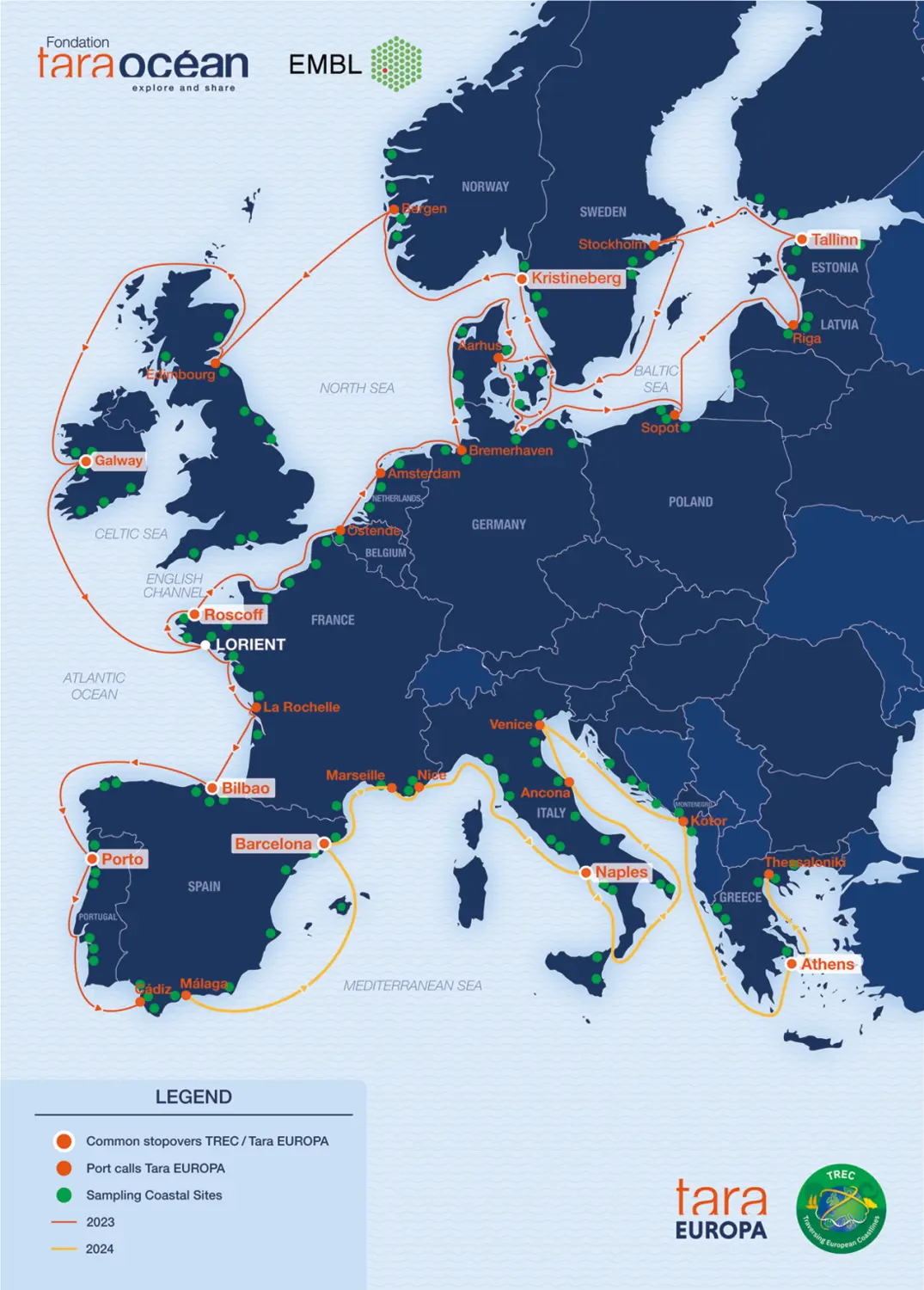
This is also where the connection with TREC appears. TREC is a scientific campaign combining a marine campaign, called Tara Europa, led by the Tara Ocean Foundation, and a land-based campaign led by EMBL. Since its launch, more than 70,000 samples have been collected across 115 transects from Finland to Greece. The TREC campaign explored the European basin in three dimensions (latitude, longitude, depth) and, to include time, relied on sediment cores and PlanktoScopes in fixed locations. The goal is to keep latitude and longitude constant and observe how ecosystems evolve through repeated measurements.
Fabien Lombard
Within the BIOcean5D project, Fabien Lombard plays a dual role. On one hand, he analyzes plankton imaging data collected during oceanographic expeditions.
On the other hand, he co-leads Work Package 1, which involves coordinating the efforts of various stakeholders and, in particular, overseeing the deployment of PlanktoScopes in partner laboratories.
Credit: LOV
Fabien Lombard is an Associate Professor at Sorbonne University, working at the Laboratory of Oceanology in Villefranche-sur-Mer. A biologist specializing in plankton, his early research focused on the ecophysiology of gelatinous zooplankton, specifically how these organisms grow, breathe, and reproduce depending on environmental conditions.
Over time, his work led him to develop in situ observation methods for plankton, using quantitative imaging tools such as ZOOSCAN, UVP, FLOWCAM, and IFCB.
Deeply involved in the full data processing chain from collection to analysis, he has been part of the PlanktoScope development team since the initial steps.
50 PlanktoScopes Deployed Across Europe
As part of the BIOcean5D project, 50 PlanktoScopes were deployed across various laboratories. “The goal of the PlanktoScope was to collect data on a large scale along the European coastline,” explains Fabien Lombard.
A Europe-wide call for expressions of interest was launched, generating over 100 positive responses from marine laboratories interested in the PlanktoScope and the Lamprey system (a planktonic biomass filter to analyze DNA/RNA).
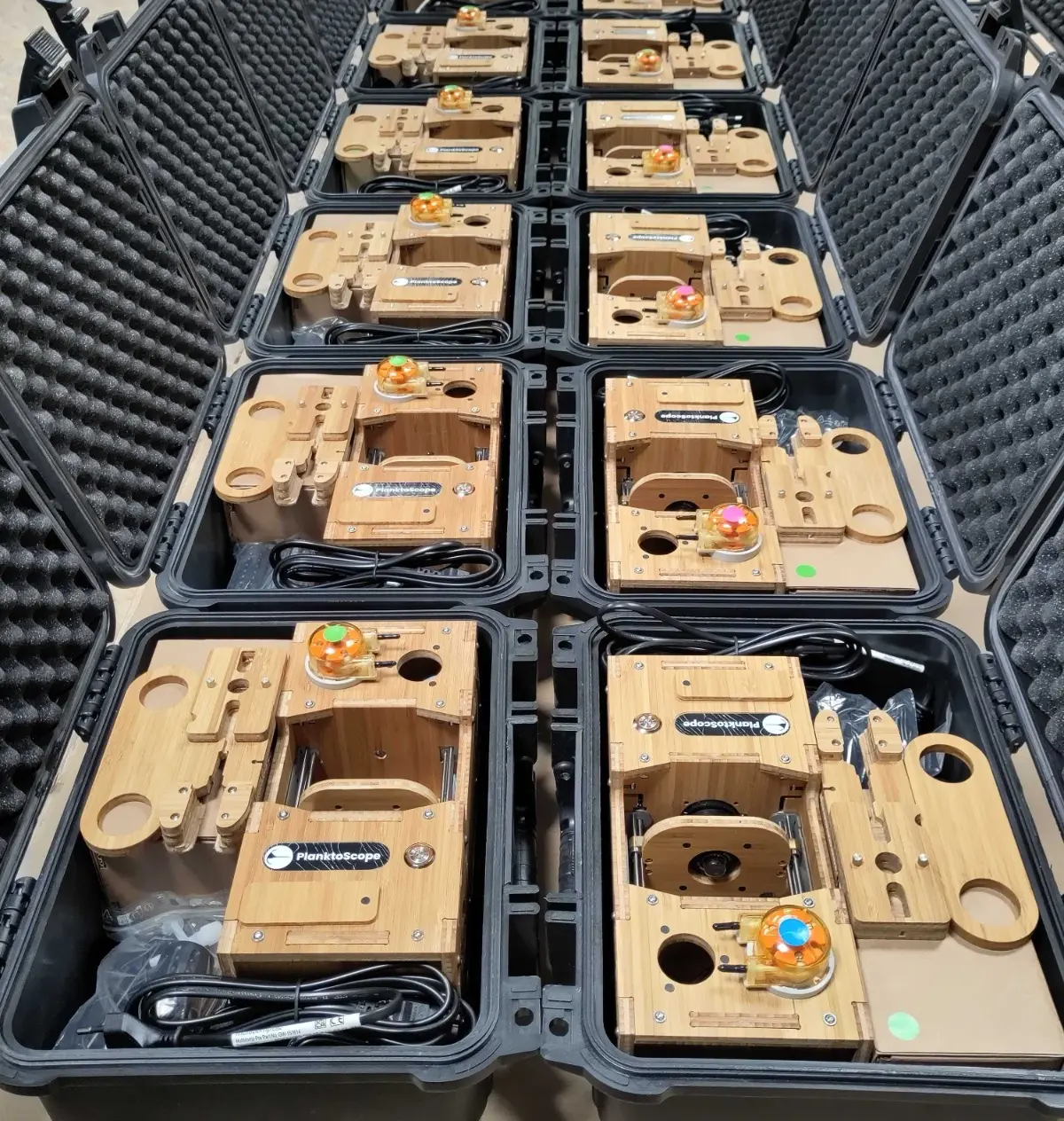
Among the selected laboratories were, for example, Ifremer (France), the Plymouth Marine Laboratory. (United Kingdom), the Centro de Investigación Marina at the University of Vigo (Spain), etc.
To ensure the proper use of the PlanktoScopes in the field, several criteria were established to guide the recipients’ selection.
- First, recipients needed to demonstrate their ability to sample their local ecosystems, ecosystems of scientific relevance, or ecosystems of interest, on a regular basis, to ensure relevant and consistent contribution to the time series established within the project.
- The second criterion was expertise in plankton taxonomy, even if only partial. Indeed, if users receive PlanktoScope images without being able to identify the organisms observed, scientific exploitation of the data is highly complicated.
- Lastly, the recipients needed to show prior experience in microscopy or quantitative imaging. These last two criteria would facilitate the analyses of the images produced through to the Planktoscope.
Fabien adds, “We weren’t necessarily expecting all potential recipients to display these three characteristics at once, but we favoured those who combined most of them, to increase the deployment’s and project’s success rate.”
Training Scientists on Using the PlanktoScope
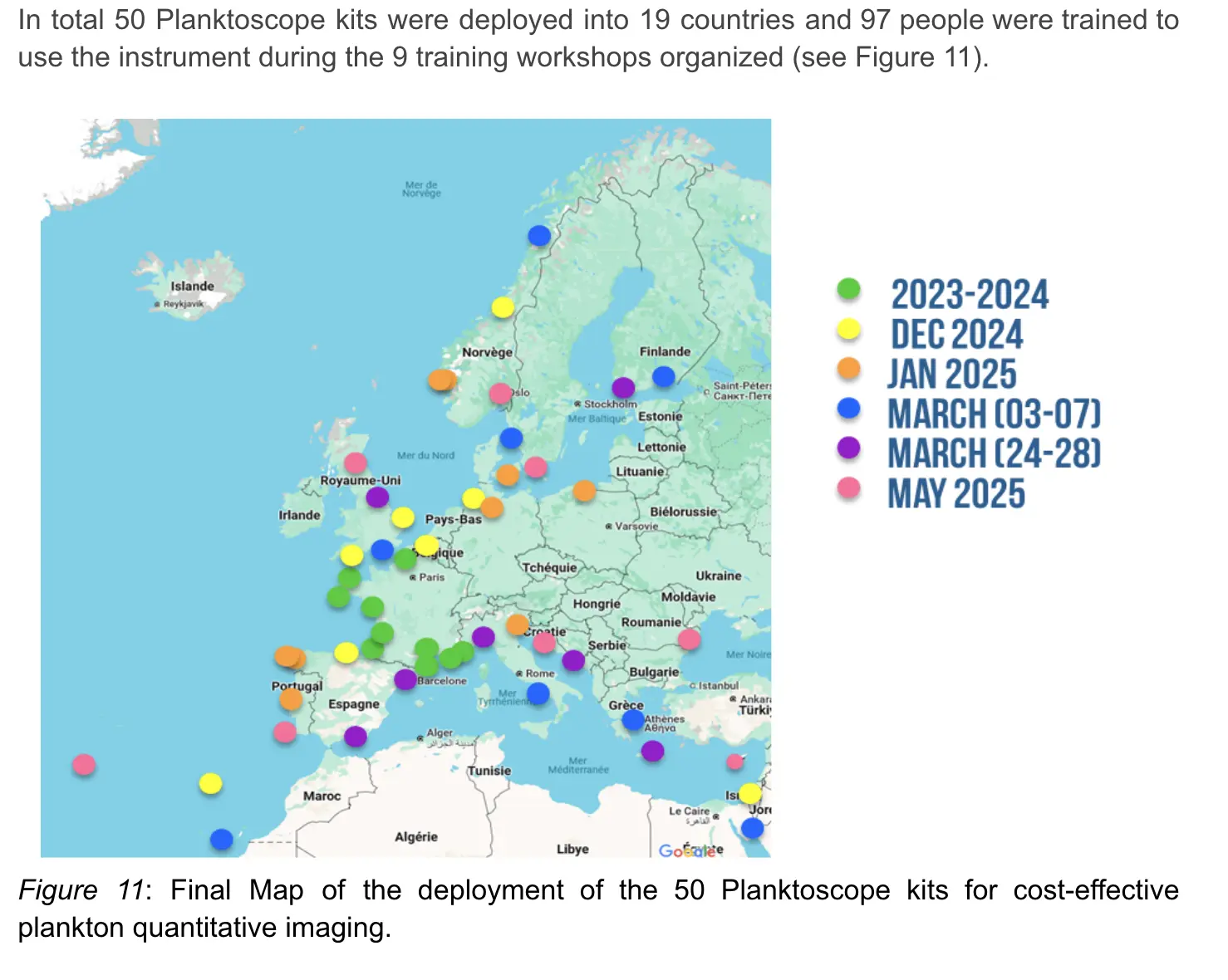
As part of the BIOcean5D project, to support the deployment of the PlanktoScope, nine training sessions were organized. Each session brought together up to 17 participants, which allowed for the simultaneous training of 8 to 9 PlanktoScope users. The sessions were led by several instructors, including Fabien Lombard.
The training sessions were structured over four to five full on-site working days. The goal was to present the instrument and to use it in real-world conditions. Each group carried out at least three full sample processing, from collection to final analysis.
According to participant feedback, the training strategy helped users gradually build up their skills, with the third run clearly showing a decrease in the amount of time needed to process a single sample. For instance, in the first attempt, a novice user might spend nearly an entire afternoon, while the same participant would only spend 20 minutes after three runs.